

HUM TV’s ‘Muamma’ is a bold flagship for this change wherein the female protagonist dictates the terms of the game, revamping the very structures that once oppressed her and forcing men to confront their own moral failings. It is a shift from the traditional damsel-in-distress narrative, presenting a woman who refuses to remain a victim of circumstance. The synergy between Imran Nazir’s layered script and Shaqielle Khan’s atmospheric direction has transformed ‘Muamma’ into a weekly obsession for viewers. Here’s why this enterprise is demanding our attention.
The Enigma of Jahan Ara
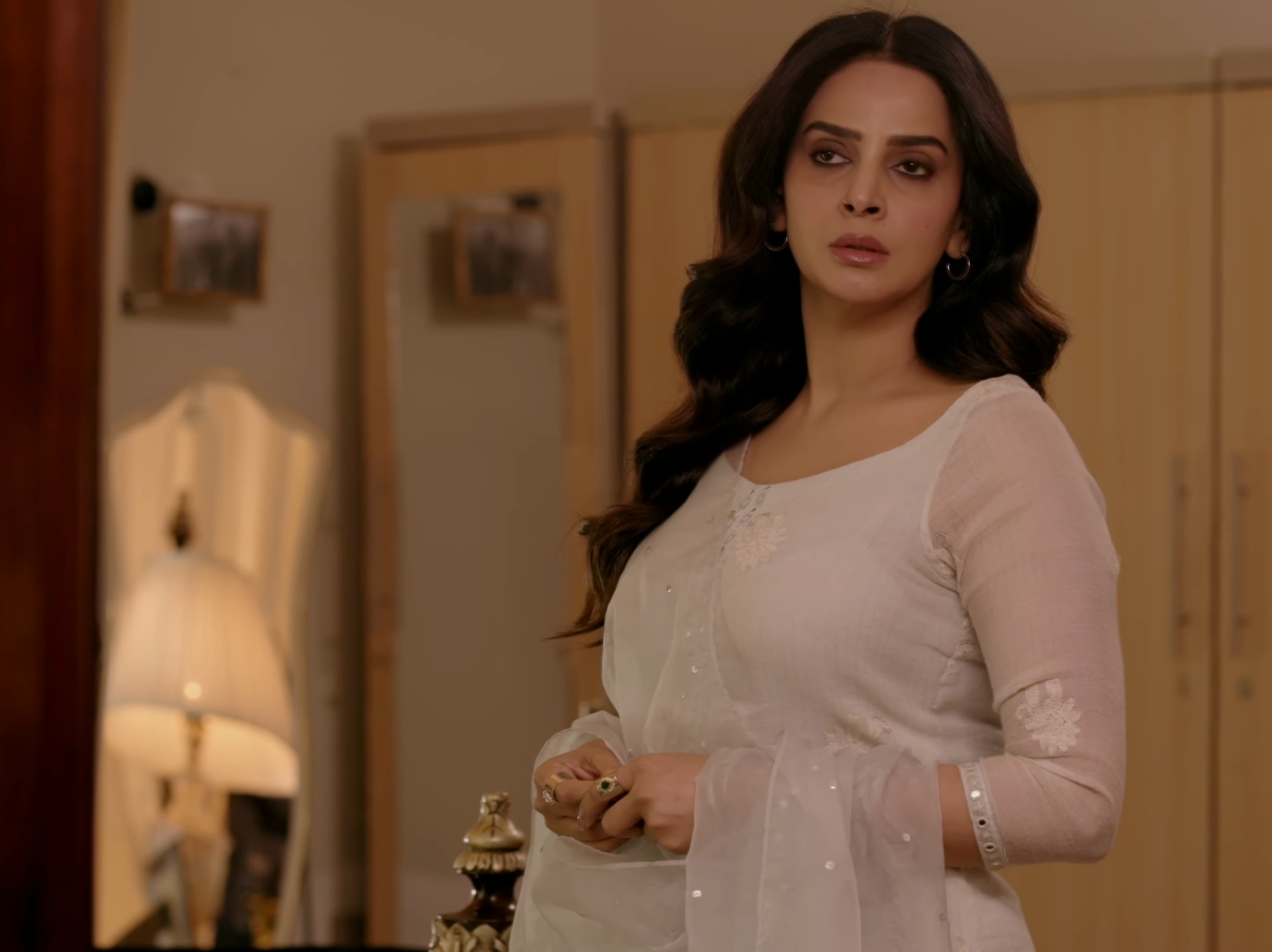
At the center of this intriguing story is Jahan Ara, (Saba Qamar) better known as Jiji. On the surface, she is simply a landlord who rents her house to newly married couples. However, she is no ordinary landlady. Behind the façade lies a far more twisted mission. Jiji carefully observes her tenants through a secret mirror installed in the house that allows her to watch their private lives unfold. Once she identifies their vulnerabilities, she systematically lures the husbands, sowing seeds of conflict and insecurity until the sanctity of the ‘happily ever after’ crumbles into divorce.


Her past experiences make her act this way. Growing up, she was constantly overshadowed by her brother, who received all the attention and affection from their family while she was left craving for the basics. This early neglect planted the seeds of resentment and insecurity. Her life took an even darker turn on the day that should have been the happiest, her wedding day. Just as she was about to begin a new chapter with the man she loved, Shajahan (Usman Mukhtar), the marriage fell apart due to an evil scheme orchestrated by Sarmad (Syed Jibran), a man consumed by toxic entitlement and obsession. Sarmad forced his way into Jahan Ara’s life, marrying her only to treat her like an object. He belittles her, abuses her physically and emotionally, and even brought his girlfriend home, humiliating Jahan Ara by forcing her to serve them. The trauma of that relationship left deep scars, shaping the person she eventually became.
When a Woman Writes the Rules
The woman in Pakistani drama is now changing. No longer confined to the familiar trope of silent suffering or endless sacrifice, female protagonists are now taking charge of their own narratives sometimes even giving men a taste of their own medicine. ‘Muamma’ is not merely a story about manipulation; it is a psychological exploration of trauma and its consequences. Jiji’s malice isn’t baseless, her actions are rooted in a painful past. Instead of surrendering, Jiji has hardened into a diamond sharp enough to cut. Her actions are a twisted litmus test for loyalty; she puts men through the fire to prove they are just as flawed as the ones who broke her. Her methods may be morally questionable, but they emerge from a place of profound hurt, making her a character that is traumatic and fascinating at the same time.


Saba Qamar in Her Most Mesmerising Avatar
‘Muamma’ belongs, without question, to Saba Qamar. As the undisputed star of the season, Saba’s talent is on display in spades. She portrays Jiji not as a caricature of a villain, but as a real, solid, and hauntingly complex woman. She looks bewitching and the way she flits from cold, calculating predator to a woman haunted by her past without breaking stride is a master class in nuance. She is the anchor that keeps this high-concept thriller grounded in raw, human emotion.


The Men in the Mirror
‘Muamma’ is further strengthened by a compelling supporting cast. Syed Jibran proves once again why he is considered one of the most versatile performers on television. Known for his ability to completely transform himself from role to role, he takes on the vicious Sarmad with chilling conviction. Ali Ansari, meanwhile, is a pleasant surprise. Holding his own opposite a powerhouse like Saba Qamar is no small feat, yet he delivers a confident and convincing performance. Usman Mukhtar’s presence adds emotional depth to the story, especially given his history with Saba Qamar’s character. Their chemistry brings a layer of nostalgia and unresolved tension to the narrative. Nabeel Zuberi makes an impact, delivering a nuanced and convincing performance. Meanwhile, Shahzad Sheikh’s entry into the story introduces a fresh dynamic, leaving viewers wondering whether Jiji will succeed in manipulating him like the others or if this time the game might take an unexpected turn?

Will Jiji Survive Her Own Smoke and Mirrors?
‘Muamma’ proves to be more than a typical drama; it is a bold character study of a complicated woman. Will Jiji’s game behind the mirror continue? The stakes are only getting higher.

