
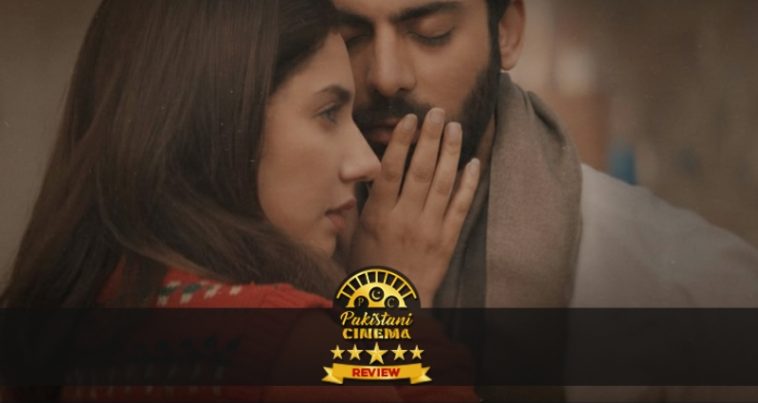
Iconic romantic pairings are nothing new for Pakistani films. Santosh Kumar and Sabiha Khanum, Darpan and Nayyar Sultana, Waheed Murad and Zeba, Nadeem and Shabnam, Sultan Rahi and Anjuman, Shaan and Reema, Moammar Rana and Saima, etc. have all had their moments.
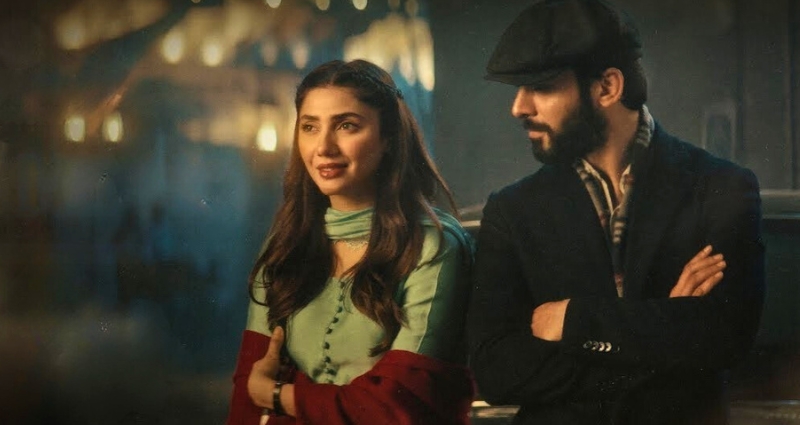
Fawad Khan and Mahira Khan have crossed over into that list despite not starring in a romantic film together. ‘Neelofar’ was supposed to be their ‘Aaina’; their ‘Armaan’. Unfortunately, it doesn’t even come close.
What is ‘Neelofar’ About?
‘Neelofar’ is about Mansoor Ali Khan (played by Fawad Khan), a celebrated and successful author. He has achieved fame with his maiden novel recounting the time spent with his late wife “Mahnoor”.
We’ll get to her later.
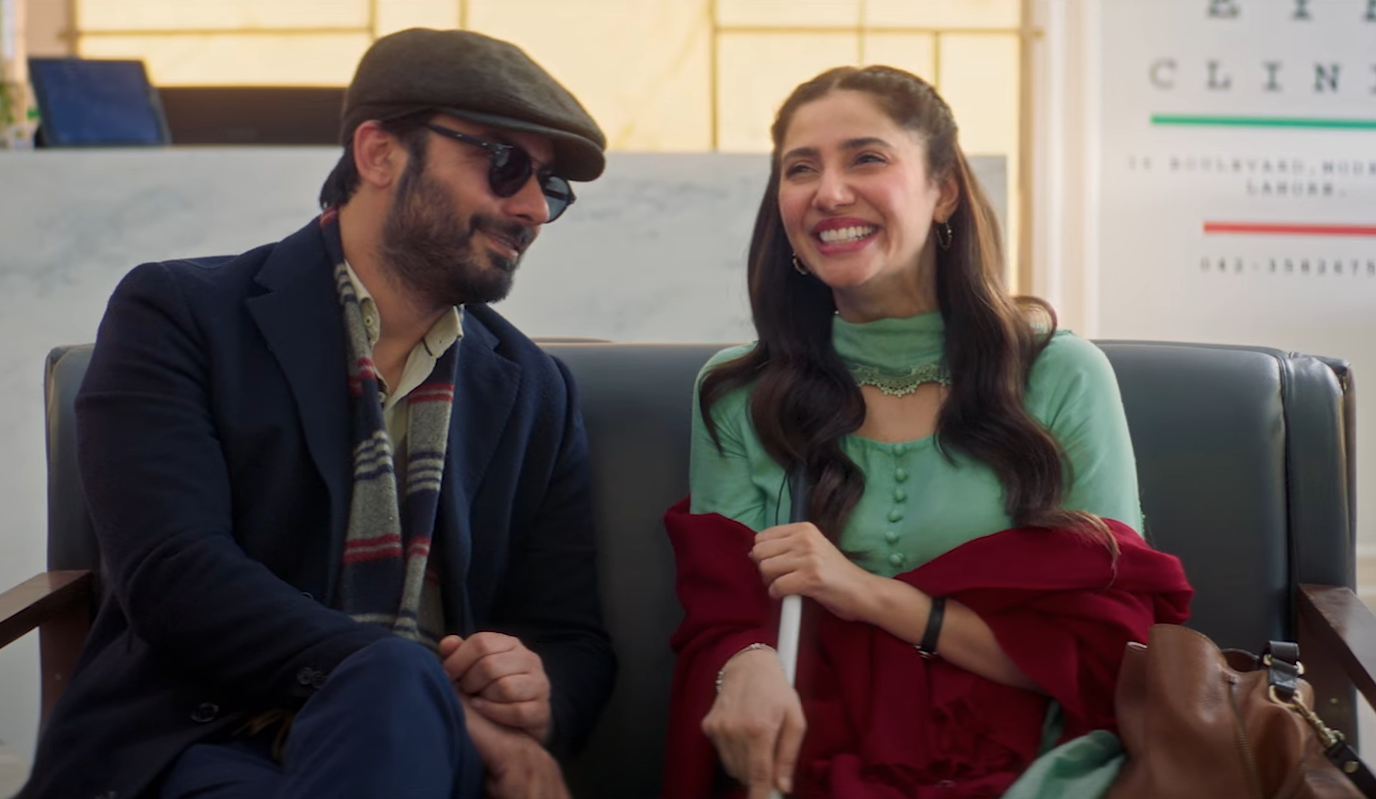
While doing a book tour in Lahore, he is enchanted by Neelofar (played by Mahira Khan) a visually impaired girl who frequents the same eye clinic as him.
Seems simple enough, until it isn’t.

The Best Things About ‘Neelofar’
At the top of the list is how ‘Neelofar’ presents Lahore. While a handful of films have been made about the city in the new wave, Lahore has arguably never looked better. ‘Taxali Gate’, ‘Zindagi Tamasha’, and ‘Karachi Se Lahore’ have all presented Lahore in different ways. However, ‘Neelofar’ can almost be a tourist ad for Lahore. Top marks there.
The music of ‘Neelofar’ is also commendable. While I didn’t hum along to every track, “Tu Meri” hooked me from the beginning and “Ja Rahay Tere Sheher Se Ham” is an instant earworm.
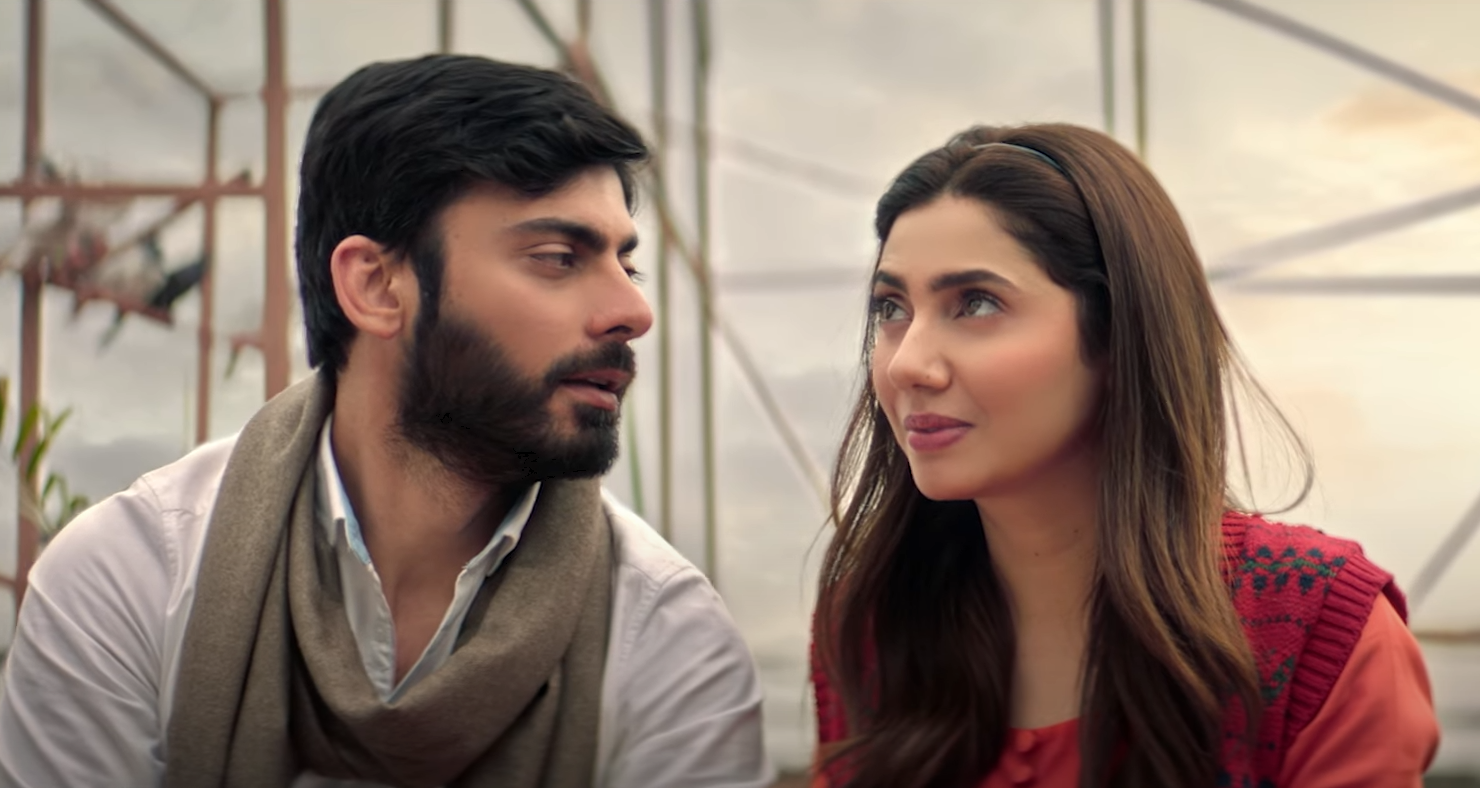
The biggest bright spot in the film however, is Neelofar herself; Mahira Khan. Her sugar bowl personality lends itself to her character well. She’s shown to be an independent girl despite her disability. She tries to live life to its full. She carries around an old tape recorder and tapes various sounds in the city of Lahore. When she finally goes through surgery to regain her eyesight, she plans to listen to these tapes again and compare the world with what she used to imagine.
That’s a really cool detail about her character.
Fawad Khan himself looks incredible in the film. It’s as if the man hasn’t aged in the past 15 years. He and Mahira have the capacity to light up the screen, but the script itself doesn’t give them much to work with.

Why is ‘Neelofar’ Too Much?
‘Neelofar’ could’ve been a simple story of a man meeting a woman who sees the world differently because she cannot see through her eyes. However, the film is overstuffed with subplots and ideas that derail it from its core message.
Fawad Khan plays a world renowned Urdu author whose debut book has made him a household name. If the film had been set 30 or even 20 years ago, this may have been believable. Today, when hardly anyone reads Urdu in Pakistan, it’s a complete fantasy, and not the good kind either.
In one scene Fawad Khan’s character is dressed in classical Lucknowi attire at a poetry reading and encouraging a new talent (played by Gohar Rasheed). He is joined by a more cynical, vain poet, Tanvir, (played by Rashid Farooqui) who belittles the “new generation” for its simplistic view. What is Fawad Khan’s writer character doing in this gathering of poets you may ask? I don’t know.
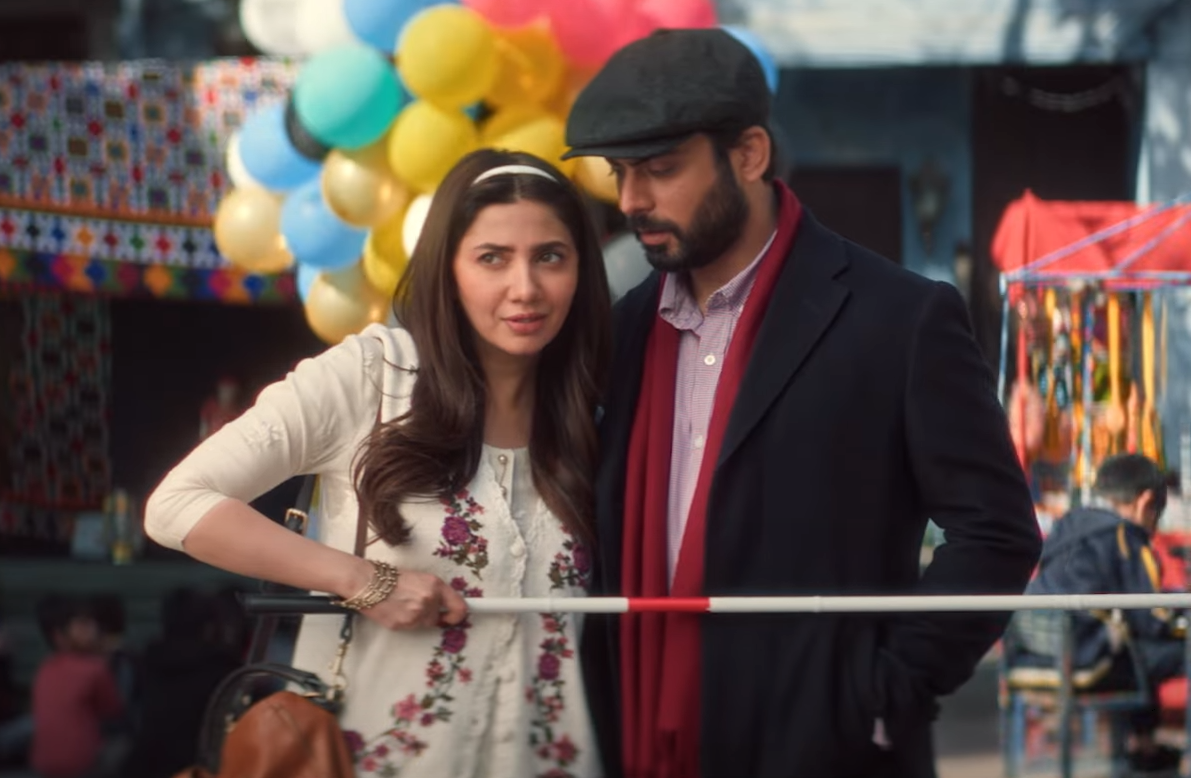
Fawad Khan’s character Mansoor is shown to meet Neelofar at an eye clinic where they literally bump into each other. After discovering that she’s blind he follows her and keeps returning to the eye clinic in the hopes of meeting her. His manager, played by Madiha Imam, cautions him against this as the social media generation that so adores him right now would deem his behaviour as “stalking”. He brushes this off, telling her that this generation knows nothing of love.
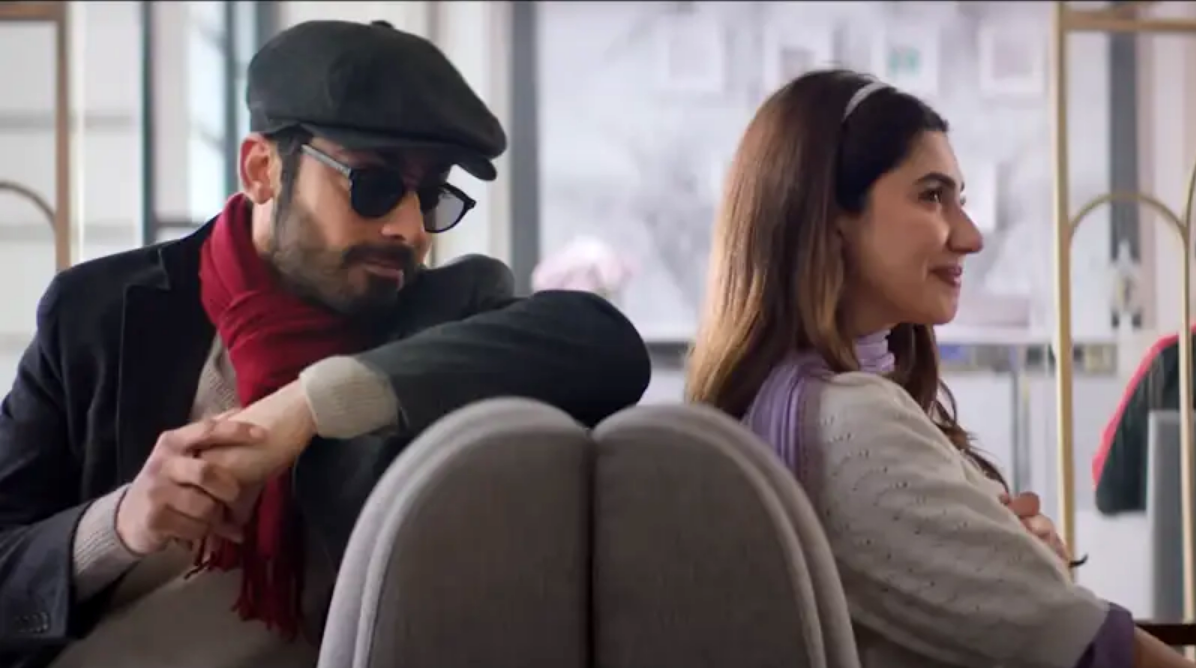

Later in the film Madiha Imam’s character, literally out of nowhere, tells him that she loves him.
There is even a conversation about the state of Urdu Literature and the boundaries of free expression in the medium.
In a bizarre scene, Neelofar boards a train (by herself without assistance) because from far away on the platform, she can hear a baby crying and wants to comfort her. And she knows her name is “Fatima”. Even putting aside this astounding feat of super hearing, what happens next is beyond belief for me. The mother of the crying baby willingly lets Neelofar, a complete stranger, who just got onto the train, hold her baby.
WHAT?!
Well, so what? These details make a rich world, and add to the film, yes? Unfortunately no.
Why is ‘Neelofar’ not Enough?
Let’s begin with Mahnoor, the deceased wife of Fawad Khan’s character Mansoor. The only details we know about her is that like Neelofar, she would scold him at times, that she was Indian, and that she died in 2013.
Her character doesn’t feel present in the film, not just because she’s hardly mentioned, but because Fawad Khan’s character never reminisces about her, how she died, and why he was so in love with her. Only a few sentences from the book about her are read aloud which give no insight into her personality. Not even a photograph of her is shown in the film.
All she gets is a black and white animated sequence in the beginning which summarizes her short life with Mansoor. Why was she part of the story at all? Why was she Indian? How did she die?
The subplot about the state of Urdu Literature goes nowhere. Fawad Khan drops a couplet from Ahmad Faraz that everyone knows. Madiha Imam paraphrases “Hamesha Deir Kardeta Hoon Main” by Munir Niyazi, and Joan Elia is mentioned in the climax.

Classic romantic films like ‘Heer Ranjha’, ‘Kabhi Kabhi’ and ‘Dilwale Dulhaniya Le Jaayeinge’ are offhandedly mentioned. You can quote references all day long, it doesn’t mean that you’re arriving at anything profound or deep or even meaningful. All of this is basic, shallow fluff that couldn’t get a passing grade in a 7th-grade Urdu exam.
Neelofar’s character is also not fully explored. She lives with her grandmother played by veteran TV actress Navid Shehzad and her driver “Fakhru Chacha” played by an ever affable Behroze Sabzwari. Does Neelofar work? Does she study? Her grandmother mentions that her father left them at an early age, so where does all their money come from? No answers.
A lot of actors are wasted in the film as well. Samiya Mumtaz gets one scene as an eye specialist. Comedian Faisal Qureshi gets perhaps 2 minutes as her office assistant. Atiqa Odho gets maybe 2 lines of dialogue as a patron of the arts in the infamous Taxali Gate neighbourhood of Lahore. Why cast these veterans of the screen if not to give them anything to do?
The saving grace of the film in my opinion is a conversation between Rashid Farooqui and Gohar Rasheed, both of whom are talents this film and its mediocre script don’t deserve.
Rashid Farooqui plays a seasoned, conservative (Riwayat Pasand) poet, and Gohar Rasheed plays a younger, modern (Taraqqi Pasand) poet just entering the literary circle. They debate the current literary scene and the sensibilities of modern writers as well as Urdu’s popularity among the masses.
It’s the only interesting conversation in the whole film because it actually has something to say. However, like the rest of the screenplay, the conversation stops short of exploring the issue further than modern literature is “vulgar”.
Now, this conversation could have mentioned that one of the pillars of the Urdu Afsaana, Saadat Hassan Manto, was accused of vulgarity in the 50s when even the progressive writers of the subcontinent were shocked at his “Siyaah Haashiye”. Playwright Shaukat Siddiqui’s “Jaangloos” and “Khuda Ki Basti” laid bare the dark underbelly of society in the 60s. Controversial poet Mustafa Zaidi wrote explicitly about his extramarital affair with wealthy socialite Shahnaz Gul in the 60s. Pakistan’s most revered Playwright and famously conservative Ashfaq Ahmed talked about and used the word “sex” on PTV in his masterpiece series “Aik Mohabbat Sau Afsaanay” in the 70s.

This conversation could’ve referenced any or all of that, but it doesn’t.
And that’s why ‘Neelofar’ is simply not enough. It gives you a lot of crumbs and morsels of ideas that could’ve been fully explored. Yet, they don’t go anywhere. This is a very telling sign of a mediocre story. It just doesn’t do anything with all the ideas it has.
And it needn’t have mentioned those ideas in the first place. Fawad Khan could’ve played an author mourning his deceased wife, who should’ve been Mahira all along. No other dead wife, no subplot about Urdu literature, and no meanderings into the social media debate were required.
You may ask dear reader, why I’m so angry about a romantic Pakistani film. Shouldn’t it be enough that Fawad Khan and Mahira Khan have united on screen? My answer to that is, why did they unite on screen to give us such a mediocre product? The best romantic films are not just remembered for their lead pairs, but their gripping and enchanting story.
‘Neelofar’ is neither!

