
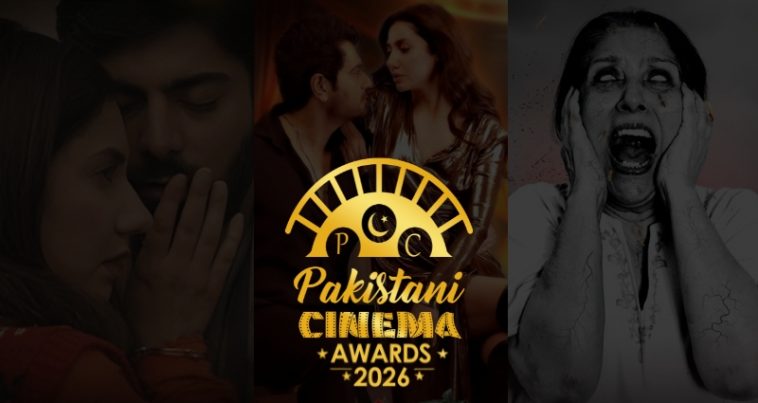
2025 was a great year for commercial successes in Pakistan. A reliable Humayun Saeed returned to give Pakistan its biggest hit since 2022 with ‘Love Guru’, and Rafay Rashdi’s ‘Deemak’ set a record for horror films in Pakistan. ‘Sindhu Ji Goonj’ also brought the Sindhi language back to theaters again. Here are the winners of the 4th Pakistani Cinema Awards:
Best Film: Deemak
‘Deemak’ holds the distinction of being Pakistan’s first commercially successful horror film. Its extended run in theaters proved that there is an eager audience in Pakistan for the genre. For weaving a wicked web of macabre and intrigue wherein each thread leads to the deep rooted evils within our own homes and society, ‘Deemak’ takes the crown for best film.
View this post on Instagram
Best Director: Rafay Rashdi (Deemak)
There have been many Pakistani horror films before ‘Deemak’ and while several have become cult favourites, none have generated the kind of box office gold it has. For creating an unsettling portrait of a Pakistani home and the evils that propagate over generations, slowly eating away at foundations until the inevitable collapse, Rafay Rashdi takes the award for Best Director this year.
View this post on Instagram
Best Actor in Leading Role (Male): Vajdaan Shah (Sindhu Ji Goonj)
Vajdaan Shah’s transformation into his various characters in ‘Sindhu Ji Goonj’ was so complete, several of our jury members didn’t even realize it was the same actor. A fisherman looking for greener pastures; a poet caught between his muse and his livelihood; a brother faced with greed and survival -Shah embodied them all. For melting into his characters as effortlessly as the Sindhu Darya flows through the land that shares its name, Vajdaan Shah wins the title of Best Actor in leading role (Male).
View this post on Instagram
Best Actor in Leading Role (Female): Samina Peerzada (Deemak)
Samina Peerzada is officially inducted into the list of Scream Queens with this one, and deservedly so. For a career-best, and certainly the year’s best performance which formed the core of ‘Deemak’; unnerving the audience with a single look and a piercing stare; Samina Peerzada sahiba receives the title of Best Actor (Female) in leading role.
View this post on Instagram
Best Actor in Supporting Role (Male): Faysal Quraishi (Deemak)
For essaying the role of a man caught between his duties as a son and a husband; one that many of us saw as a mirror, Faysal Quraishi clinches the trophy for Best Actor (Male) in a supporting role for ‘Deemak’.
View this post on Instagram
Best Actor in Supporting Role (Female): Sonya Hussyn (Deemak)
For reaching beyond the melodramatic and effectively conveying the creeping sensation of darkness pulling even the strongest of souls under its cover, Sonya Hussyn takes home the trophy for Best Actor (Female) in a supporting role for ‘Deemak’.
View this post on Instagram
Best Screenwriter: Ayesha Muzaffar (Deemak)
Horror is a niche genre in film, but we’ve all grown up listening to scary stories. They’re about the world around us; sometimes even the one right outside our doorstep. For effectively ensnaring us in a tale all too familiar, inspired not just by true events, but by the trauma that we all carry with us, Ayesha Muzaffar receives the award for Best Screenwriter for ‘Deemak’.
View this post on Instagram
Best Original Song: “Toot Gaya” (Love Guru)
“Toot Gaya” goes through many stages from beginning to end, as if to signify the many stages of grief that a broken heart endures. Saad Sultan’s composition begins beautifully with Yashal Shahid’s soulful lament, is carried by Farhan Saeed as the storm brews, and is finally transported to the mystical realm of deeper understanding by Zain and Zohaib Ali. Saad Sultan and Tahir Abbas skillfully avoid cliches in their writing and give this ballad its due lyrics. An ace in the hole from all angles, “Toot Gaya” truly deserves the award for Best Original Song.
View this post on Instagram
Best Playback Singer: Zeeshan Vicky for “Jaa Rahy” (Neelofar)
Zeeshan Vicky did an admirable job with the soundtrack of ‘Neelofar’. However, his voice truly stood out; sonorous and clear for “Jaa Rahy”. For articulating that a city is more than the buildings and structures within it -it’s the people; or more aptly the person in it that makes that city home -he takes home the award for Best Playback Singer.
View this post on Instagram
Best Background Score: Neelofar
Lahore is rightly called the heart of Pakistan for all its culture, history, literature and art. It’s hard to articulate the feeling of living in any city through music, let alone the beating heart of a nation of 250 million people. For bringing the Lahore of millions of beating hearts to life for the audience, ‘Neelofar’ takes the award for Best Background Score.
View this post on Instagram
Best Sound Design: Neelofar
Sound Designers Anser Soomro and Umer Shafqat, Sound Recordist Muhammad Absar Khan, Production Sound Mixer Qirat Kazi, and Mix Supervisor Aravind Vijayakumar all deserve kudos for delivering sound worthy of the theater experience in ‘Neelofar’. For some of the clearest, crispest sound design we’ve heard in a Pakistani film, the Sound Department of ‘Neelofar’ gets the award for Best Sound Design.
View this post on Instagram
Best Production Design: Neelofar
Neelofar’s production design made the film look dreamy and ephemeral, as if one were floating through a dream. Whether it was the book readings, the eye clinic, the myriad restaurants and cafes, or even the house overlooking Old Lahore, the production design department did their part. They get the award for Best Production Design.
View this post on Instagram
Best Editing: Rizwan AQ (Love Guru)
The highest grossing film of the year was also one of the longest films of the year at 2 hours and 31 minutes. Yet, Rizwan AQ’s editing ensured that tight sequences and great pacing kept the audience engaged and entertained. For his stellar editing work, he walks home with the Best Editing trophy.
View this post on Instagram
Best Cinematography: Richie Yau (Neelofar)
An afternoon sun shimmering on the surface of a lake. The misty air hanging over Badshahi Masjid. The splendor of Old Lahore. It was all there on the screen in an incredible feast for the eyes. Richie Yau did a fantastic job framing Lahore in ‘Neelofar’. He takes home Best Cinematography.
View this post on Instagram
Special Mention: Salman Jakhro for writing “Neem Ji Chaaon Mein” (Sindhu Ji Goonj)
‘Sindhu Ji Goonj’ brought back Sindhi cinema to Pakistan after nearly 30 years. It also brought back Sindhi poetry to the screen. Salman Jakhro’s “Neem Ji Chaaon Mein” was the thread that weaved the anthology together. In a few simple verses, it described the memory, the plight, the struggle of Sindh and the Sindhu Darya under the shade of a Neem tree. It was poignant and all-encompassing. We hope to see more of his poetry in films in the future. He gets a Special Award in recognition of his talents.
View this post on Instagram


Comments
0 comments